


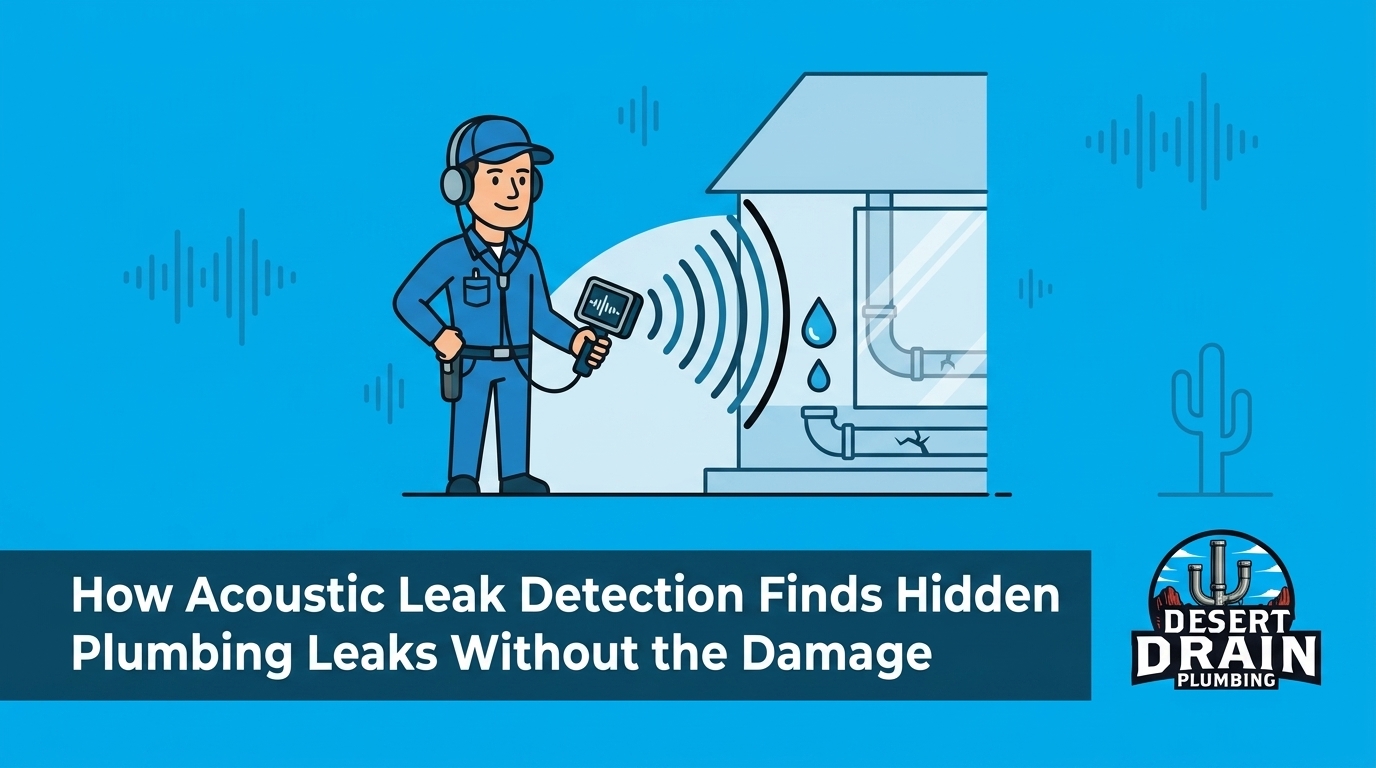
The Invisible Problem: When Summer Leaks Leave No Trace
You open your July utility statement to find your water usage has spiked drastically, but when you walk through your home and yard, everything is bone dry. This is exactly when acoustic leak detection becomes the most critical tool for protecting your property. You are dealing with a hidden plumbing failure, and finding it without destroying your floors or landscaping requires specialized technology.
During peak summer in Mesa, AZ, tracking down a hidden water leak using traditional visual methods is nearly impossible. The intense 110-degree July heat instantly evaporates surface water before it ever has a chance to form a visible puddle. At the same time, the hard, sun-baked caliche soil common in our area acts like a concrete barrier, trapping escaped water deep underground. Instead of bubbling to the surface, the water travels along the path of least resistance beneath your foundation.
Because underground plumbing systems are highly vulnerable to shifting soil conditions as the ground dries and compacts, pipes can easily develop stress cracks or pinhole leaks. When surface clues are entirely masked by the extreme desert environment, property owners are left in the dark. This invisible threat is a leading cause of sudden slab leaks in older homes, where water quietly erodes the soil supporting the foundation.
Without physical evidence, you cannot rely on guesswork. Acoustic leak detection provides the definitive solution for finding these invisible leaks. By listening to the precise frequency of escaping water, technicians can locate the exact source of the problem beneath solid concrete or hard-packed earth, saving your property from unnecessary destruction.
What Is Acoustic Leak Detection?
Acoustic leak detection is a non-invasive diagnostic method that uses highly sensitive ground microphones to pinpoint the exact location of hidden plumbing leaks. Instead of breaking through walls or digging up floors to find a broken pipe, technicians use advanced listening equipment to hear the specific sound of pressurized water escaping from the plumbing system.
When a pipe develops a crack or a pinhole, the water inside is under significant pressure. As it forces its way out of that tiny opening, it creates a distinct acoustic signature. Acoustic leak detection equipment captures that sound, amplifies it, and allows a trained professional to trace it directly to the source. This technology has completely revolutionized plumbing diagnostics, becoming the industry standard for locating hidden water lines without causing property damage.
The essential components of acoustic leak detection equipment include:
- Ground Microphones: Highly sensitive sensors placed on top of concrete slabs, tile, or soil to capture subterranean vibrations.
- Listening Discs: Specialized contact microphones used on hard surfaces or directly on exposed pipes to amplify structural sounds.
- Electronic Amplifiers: The central processing unit that boosts the faint sound of escaping water while filtering out unwanted background noise.
- Aviation-Grade Headphones: Noise-canceling headsets that allow the technician to hear isolated acoustic frequencies with absolute clarity.
By combining these highly calibrated tools, professionals can accurately map out a home’s plumbing system and locate leaks that are buried several feet underground or hidden behind thick drywall.
The Science Behind the Sound: Listening to Escaping Water
The problem: Water escaping from a pressurized pipe does not produce a single, uniform sound. Depending on the size of the leak, the pressure in the line, and the surrounding environment, the acoustic signature changes drastically. For a technician, the challenge is interpreting these varying sound waves to determine exactly where the pipe has failed.
The cause: As water exits a pressurized pipe, it interacts with both the pipe material and the surrounding environment, creating two distinct types of acoustic frequencies. Understanding the difference between these sounds is the key to accurate detection.
| Acoustic Profile | Sound Characteristics | What It Indicates |
|---|---|---|
| High-Frequency Sounds | A sharp “hiss” or “whoosh” | The actual point of exit where pressurized water is forcing its way through a crack or pinhole in the pipe. |
| Low-Frequency Sounds | A dull “thump” or “splash” | Water hitting the surrounding soil, gravel, or concrete foundation after it has already left the pipe. |
The solution: Technicians use electronic filters built into their amplifiers to isolate these specific leak frequencies. By tuning the equipment to listen exclusively for the high-frequency hiss, they can walk right past the low-frequency sounds of water pooling in the soil, leading them directly to the exact point of the pipe failure.
Filtering Out the Noise
Finding a leak in a quiet laboratory is one thing; finding a leak in a bustling Mesa AZ neighborhood is entirely different. Modern acoustic tools are equipped with sophisticated frequency filters designed to block out ambient background noise. Traffic rumbling down the street, wind blowing against the house, and even the hum of a refrigerator can easily drown out the subtle hiss of a pinhole leak.
To overcome this, technicians must carefully calibrate their equipment to the specific environment of your home. By setting band-pass filters, they can mute the low rumbles of passing cars and the high pitches of wind, isolating only the frequency range where escaping water operates. This calibration requires a deep understanding of acoustics and extensive field experience to ensure that what the microphone picks up is actually a plumbing leak and not just normal household vibrations.

How Pipe Materials Affect Leak Detection Frequencies
Not all plumbing systems sound the same when they fail. The material of the pipe itself plays a massive role in how sound waves travel, which directly impacts how acoustic leak detection is performed. Sound travels through vibrations, and different materials either amplify or dampen those vibrations.
Rigid Metal Pipes: Materials like copper and galvanized steel are excellent conductors of sound. Because they are rigid, they carry the high-frequency vibrations of a leak over long distances. If you have a leak on a copper water line beneath your slab foundation, a technician might be able to hear the acoustic signal from several feet away. The sound rings clearly through the metal, making it relatively straightforward to trace the line and pinpoint the loudest point of the frequency.
Flexible Plastic Pipes: Modern plumbing materials like PVC and PEX present a much bigger challenge. Plastic absorbs sound rather than transmitting it. When a PVC pipe leaks, the material dampens the high-frequency hiss, resulting in a much lower frequency signal that does not travel far down the pipe. This means the acoustic footprint of a plastic pipe leak is significantly smaller and harder to detect.
Adjusting the Approach: Because of these material differences, technicians must adjust their approach based on the home’s plumbing framework. When dealing with sound-absorbing plastic pipes in Mesa AZ slab foundation homes, professionals often have to place their ground microphones much closer together, moving in tiny increments to ensure they do not miss the muffled acoustic signal. They may also need to adjust their electronic filters to pick up the lower-frequency sounds that plastic pipes produce.
The Non-Destructive Advantage: Saving Your Yard and Floors
The problem: For decades, the only way to find a hidden underground leak was through the outdated “guess and dig” method. If a homeowner noticed a spiking water bill or a warm spot on the floor, plumbers would have to make an educated guess about the leak’s location and start tearing things apart. This often meant jackhammering multiple holes through a concrete slab foundation or trenching massive ditches through mature landscaping just to find the source of the problem.
The cause: The guess and dig method is inherently flawed because water rarely surfaces exactly where the pipe is broken. Water follows the path of least resistance. A leak in the center of your living room might travel along the underside of the concrete slab and finally show signs of moisture near the front door. If a plumber starts breaking concrete at the front door, they will find wet soil, but no broken pipe, leading to more and more destructive searching.
The solution: Acoustic leak detection eliminates this destructive guesswork. By listening to the precise acoustic frequency of the escaping water, technicians can pinpoint the exact location of the leak within inches. The non-destructive advantage means that instead of tearing up your entire kitchen floor or destroying a manicured lawn, the repair is limited to a single, localized access point.
The benefits of non-destructive detection include:
- Preserving Property Value: No unnecessary damage to expensive hardwood floors, custom tile, or concrete driveways.
- Reducing Repair Stress: Eliminates the chaos, dust, and massive cleanup associated with exploratory demolition.
- Faster Resolution: Pinpointing the leak accurately means the actual repair work can begin immediately.
- Lowering Restoration Costs: You only have to patch one small access hole rather than rebuilding an entire room or replanting a whole yard.
Why Professional Acoustic Detection Beats DIY Guesswork
When faced with a hidden water issue, some homeowners attempt to track down the source themselves using consumer-grade tools. However, interpreting acoustic data requires a high level of expertise, and DIY guesswork often leads to costly mistakes.
Consumer-grade moisture meters or automotive stethoscopes simply cannot replicate the sensitivity and filtering capabilities of professional acoustic gear. A basic stethoscope will amplify every sound in the ground, leaving a DIYer completely overwhelmed by ambient noise. Without electronic band-pass filters, you cannot separate the sound of a pinhole leak from the sound of wind vibrating the house.
Furthermore, it takes significant training to differentiate a pressurized pipe leak from other common water sources. An untrained ear might easily confuse the sound of irrigation runoff draining through the soil or a nearby air conditioning condensate line with a main water line failure. This leads to false positives, where a homeowner might attempt to dig up a section of their yard only to find perfectly intact pipes.
Desert Drain Plumbing is committed to using advanced, non-invasive diagnostic technology because we know that accurate diagnostics are the first step to a permanent, code-compliant repair. Our trained experts interpret these acoustic signals accurately to save homeowners from unnecessary property damage. There are also severe safety risks involved in attempting to expose underground pipes without exact utility marking and precise leak location. Accidentally striking a buried electrical line or gas pipe while blindly digging for a water leak can be catastrophic. Professional acoustic detection ensures the problem is mapped safely and accurately before a shovel ever hits the dirt.
Next Steps: What to Do If You Suspect a Hidden Leak
If you are dealing with unexplained water usage, a water bill that has suddenly doubled during peak summer, or subtle structural shifts in your home, these are strong indicators that you need an acoustic inspection. Ignoring the signs of a hidden leak will not make the problem go away; it will only allow the escaping water to erode more soil and compromise your foundation further.
It is vital to act quickly before hidden water causes severe foundational damage. The longer a leak runs beneath a slab or behind a wall, the more extensive the eventual restoration will be.
If you suspect a hidden water line failure, seek out a professional equipped with acoustic leak detection technology. You do not have to authorize exploratory demolition just to find the source of your problem. With the right acoustic tools and trained experts listening to the frequencies beneath your floors, the exact location of the leak can be pinpointed before a single hammer swings, protecting your home and your peace of mind.
Frequently Asked Questions
How does acoustic leak detection work?
Acoustic leak detection works by using highly sensitive ground microphones to amplify the sound of pressurized water escaping from a pipe. Technicians place these microphones on the floor or ground to capture acoustic vibrations. The equipment filters out background noise, allowing the professional to trace the specific high-frequency hiss of the leak to its exact source.
Can you hear an underground water leak without equipment?
In most cases, you cannot hear an underground water leak without specialized equipment. While a massive water main break might produce a faint rumbling sound, standard pinhole leaks under concrete slabs or deep in the soil are completely silent to the naked ear. Acoustic amplifiers are required to boost these faint frequencies so they can be detected.
How accurate is acoustic water leak detection?
Acoustic water leak detection is highly accurate, often pinpointing the exact location of a broken pipe within a few inches. The accuracy depends on the skill of the technician interpreting the sounds and the type of pipe material involved. When performed correctly by a trained professional, it prevents the need for destructive, exploratory digging.
What equipment is used to find a water leak under concrete?
To find a water leak under concrete, professionals use ground microphones, listening discs, and electronic amplifiers. The ground microphones are placed directly on the concrete slab to capture subterranean vibrations. The amplifier then filters out ambient household noises, allowing the technician to hear the distinct sound of water spraying beneath the foundation.
Does acoustic leak detection work on PVC pipes?
Yes, acoustic leak detection works on PVC pipes, though it is more challenging than detecting leaks in metal pipes. Because plastic absorbs sound, the acoustic vibrations do not travel as far and produce a lower frequency. Technicians must adjust their equipment’s filters and place their microphones closer together to accurately track leaks in PVC or PEX plumbing.
How long does a professional leak detection service take?
A professional leak detection service typically takes between one to three hours, depending on the complexity of the plumbing system and the size of the property. If the leak is located under a thick concrete slab or if the home uses sound-dampening plastic pipes, the process may take slightly longer. The goal is always precise accuracy to ensure the subsequent repair is as minimally invasive as possible.