

The Hidden Threat Beneath the Sink: When Quick Fixes Turn Destructive
Your bathroom sink is draining at a crawl, and murky water is starting to pool stubbornly around the stopper. For most homeowners dealing with slow drains, the path of least resistance leads straight to the hardware store for a brightly colored bottle of liquid plumbing solution. But before you unscrew that cap, you need to understand the exothermic danger of chemical drain cleaners on aging PVC pipes. What seems like a cheap, simple fix is actually a catalyst for severe structural damage hidden just out of sight. Here at Desert Drain Plumbing, we’ve seen countless Mesa homeowners fall into this trap, turning a minor clog into a major pipe replacement.
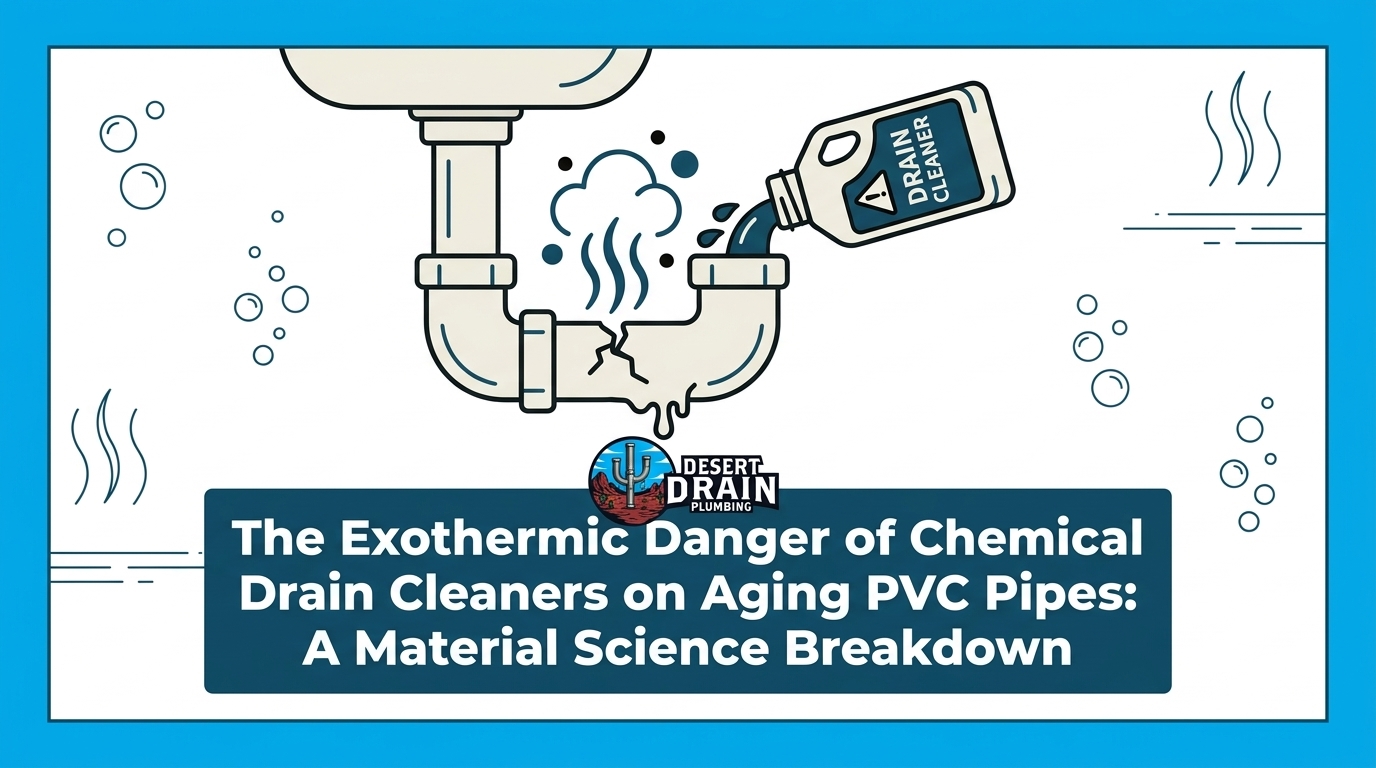
The critical decision point occurs right there in the plumbing aisle. You are choosing between a seemingly inexpensive chemical liquid and professional mechanical clearing methods. Store-bought chemical liquids are marketed heavily as fast, effortless solutions that dissolve clogs on contact. However, pouring these harsh chemicals down your drain unknowingly triggers a violent physical reaction inside the closed environment of your plumbing system.
The reality of chemical drain cleaners:
- They do not gently wash away debris: Instead, they rely on aggressive chemical reactions to eat through solid mass.
- They create localized heat traps: The chemical reaction generates intense heat right where the water has stopped flowing.
- They attack infrastructure: The resulting thermal stress attacks the weakest points in your system, particularly aging PVC pipe joints.
Rather than safely dissolving a clog and restoring normal water flow, these liquid solutions introduce severe thermal stress to your home’s infrastructure. The plastic pipes beneath your sink were engineered to transport wastewater at moderate temperatures, not to serve as a containment vessel for a boiling chemical reaction. When quick fixes turn destructive, the resulting water damage and necessary pipe repairs far outweigh the initial convenience of a store-bought bottle.
Understanding the Exothermic Reaction Inside Your Pipes
The Problem: When organic material like hair, soap scum, and cooking grease binds together inside a pipe, it creates an impenetrable wall. Water backs up behind this blockage, creating a stagnant pool inside the drain line. Homeowners pour chemical cleaners directly into this standing water, expecting the liquid to safely eat through the organic matter without affecting the surrounding materials.
The Cause: Store-bought cleaners rely on highly reactive active ingredients to break down clogs, primarily sodium hydroxide (commonly known as lye) or concentrated sulfuric acid. When these caustic chemicals make contact with standing water and the organic clog material, a chemical process called hydration occurs. This process breaks the chemical bonds of the clog, but it also releases massive amounts of energy. This energy manifests as an exothermic reaction—a chemical reaction that releases energy through light or, in this case, extreme heat. The temperature of the water trapped in the pipe spikes rapidly, essentially boiling the liquid inside the enclosed plastic tube.
The Solution: Our plumbers always stress that understanding this chemistry is the first step in protecting your plumbing. Because the drain is blocked, the heat cannot dissipate or flow away. It is trapped locally at the exact site of the blockage, concentrating all of that thermal energy on one specific area of the plumbing. This prolonged, concentrated heat exposure is what ultimately compromises the structural integrity of aging PVC pipe joints.
Chemical Dissolving vs. Thermal Damage
The intended function of these acidic or caustic products is to dissolve hair and grease through rapid chemical breakdown. Manufacturers design these formulas to be as aggressive as possible to ensure the clog is destroyed. However, the unintended byproduct of this aggression is a localized boiling effect. The surrounding plastic pipe, the rubber gaskets, and the solvent cement holding the system together were never engineered to withstand this level of sudden, intense heat. While the chemical may successfully burn through the hair tie or grease ball, it is simultaneously softening and warping the very pipe meant to carry the waste away.
Schedule 40 PVC vs. Chemical Heat Spikes
Standard residential plumbing systems rely almost exclusively on Schedule 40 PVC (polyvinyl chloride) for drain, waste, and vent lines. This durable, rigid plastic is favored for its corrosion resistance and ease of installation. However, Schedule 40 PVC is rated for very specific, moderate temperature ranges. It is designed to handle warm shower water and hot dishwasher drainage, but it has strict thermal limitations.
The Plastics Pipe Institute (PPI) notes that standard residential PVC has a maximum recommended operating temperature of exactly 140 degrees Fahrenheit. When exposed to temperatures below this threshold, the plastic maintains its structural rigidity and pressure ratings. When temperatures rise above this mark, the material properties begin to change rapidly.
An exothermic reaction from lye or sulfuric acid mixed with standing water can easily generate temperatures well above this 140-degree threshold, sometimes exceeding 200 degrees Fahrenheit in a matter of minutes. When plastic exceeds its thermal limit, it undergoes physical changes, softening, losing its structural rigidity, and becoming pliable.
| Heat Source / Material Limit | Approximate Temperature (°F) | Impact on Schedule 40 PVC |
|---|---|---|
| Warm Shower Water | 100°F – 105°F | Normal operation; no structural impact. |
| Standard Hot Water Heater Max | 120°F – 130°F | Safe operating range; maintains rigidity. |
| PVC Maximum Rated Limit | 140°F | Threshold of safe continuous operation. |
| Exothermic Chemical Reaction | 180°F – 200°F+ | Plastic softens, warps, and permanently deforms. |
The Physics of Plastic Deformation
At elevated temperatures, the polymer chains that give PVC its strength begin to relax and separate. The pipe transforms from a rigid tube into a soft, flexible state. Under the heavy weight of standing water and the internal pressure of the blockage, the softened pipe can warp, sag, or permanently deform. Even if the pipe cools down after the clog clears, it hardens in this new, distorted shape, creating permanent bellies in the line that will inevitably catch debris and cause future clogs.

How Ambient Heat and Temperature Shifts Weaken Plumbing
The danger of chemical heat spikes does not exist in a vacuum; environmental factors play a massive role in how much stress your plumbing can handle. Plumbing runs through unconditioned spaces in your home, such as exterior walls, crawlspaces, or attics. These spaces absorb intense ambient environmental heat, especially in regions with extreme summer climates.
In our years of serving Mesa, the team at Desert Drain Plumbing has seen firsthand how extreme summer temperatures regularly exceeding 100°F bake unconditioned spaces, meaning the pipes running through your attic or exterior walls are already physically hot before you even turn on a faucet. These high baseline temperatures leave the plastic with almost no thermal margin. If the pipe is already sitting at 110°F from ambient heat, an exothermic spike from a drain cleaner only needs to raise the temperature by 30 degrees to push the PVC past its melting point.
As seasons change, building materials naturally undergo thermal expansion and contraction. During early fall, a pattern we see often is minor temperature shifts causing thermal contraction in home materials as the nights finally start to cool down. The plastic pipes shrink slightly as the ambient temperature drops. Introducing sudden, extreme chemical heat shocks to the system during these seasonal transitions drastically increases the risk of a catastrophic material failure. The rapid expansion of the locally heated pipe against the contracting, cooler sections of the surrounding plumbing creates sheer stress that the plastic simply cannot survive without cracking or warping.
Why Pipe Connections Fail First Under Thermal Stress
The Problem: When a pipe is subjected to extreme thermal stress, the damage rarely occurs in the middle of a straight run of plastic. Instead, the failure almost always happens at the fittings and connections, resulting in hidden leaks that cause massive water damage over time.
The Cause: PVC plumbing systems are not threaded together like old galvanized steel; they are held together by solvent cement. This cement does not just glue the pieces together; it chemically melts the surface of the pipe and the fitting, welding the two pieces of plastic into a single, continuous joint. These connections are incredibly rigid and rely on exact, microscopic tolerances to maintain a watertight seal. When thermal warping occurs from an exothermic chemical reaction, the pipe and the fitting may expand at different rates. This uneven expansion breaks the chemical bond of the weld. Furthermore, years of normal use, minor house settling, and constant water flow naturally fatigue these connections over time. Aging PVC pipe joints are already rigid and brittle, making them highly susceptible to snapping or separating when sudden heat is applied.
The Solution: Recognizing the signs of a compromised joint early can save you from extensive structural damage. If you have recently used a chemical cleaner, you must monitor the plumbing below the sink for signs of failure.
When responding to calls across the Valley, our team typically spots a few telltale signs of a thermally warped joint:
- Slow leaks under sink traps: Water steadily dripping from the curved P-trap directly below the drain.
- Moisture inside cabinet floors: Unexplained dampness, warping wood, or bubbling laminate inside the vanity cabinet.
- Water stains on drywall: Discolored rings or soft spots on the ceiling or walls directly below the site of the blockage.
- Foul odors: Sewer gases escaping through micro-cracks in the compromised solvent weld.
Preserving Infrastructure with Mechanical Drain Clearing
At Desert Drain Plumbing, we firmly believe the only way to guarantee the safety and longevity of your home’s plumbing infrastructure is to remove the blockage without altering the temperature of the pipe. This means avoiding the chemical aisle entirely and relying on proven, mechanical methods to restore water flow.
Mechanical methods physically extract or break apart the clog using friction and force rather than reactive heat. Professional augering or cabling (often called drain snaking) utilizes a flexible metal cable with a specialized cutting head to physically bore through hair, grease, and soap scum. This method breaks the stoppage apart so it can be flushed safely down the main sewer line, all while keeping the pipe at a safe, ambient temperature.
For severe, recurring blockages or heavy grease buildup, advanced techniques utilize targeted water pressure rather than chemical heat. Understanding the science of clearing severe pipe blockages through methods like hydro-jetting reveals how high-pressure water can scour the inside of the pipe clean without introducing a single caustic chemical or raising the temperature of the plastic.
Advocating for professional, damage-free drain clearing methods preserves your home’s infrastructure. Prioritizing mechanical clearing prevents the need for costly drywall removal, cabinet replacement, and major pipe repairs caused by melted plastic. A minor clog should remain a minor inconvenience, not the catalyst for a major plumbing reconstruction.
Frequently Asked Questions About Drain Cleaners and Pipe Safety
Why does drain cleaner get hot?
Drain cleaners get hot because of a violent chemical reaction called hydration. When active ingredients like sodium hydroxide (lye) or sulfuric acid mix with standing water and organic clog material, they release massive amounts of energy. This exothermic reaction rapidly spikes the temperature of the water, generating localized heat to burn through the blockage.
Do chemical drain cleaners damage PVC pipes?
Yes, chemical drain cleaners can cause severe and permanent damage to PVC pipes. The heat generated by the chemical reaction often exceeds the 140-degree Fahrenheit maximum temperature limit of standard Schedule 40 PVC. This extreme heat softens the plastic, causing the pipe to warp, sag, and permanently lose its structural integrity.
Can Drano melt plastic pipes?
While brand-name liquid cleaners are formulated for consumer use, repeated or improper application can generate enough heat to deform plastic plumbing. The chemical reaction creates thermal stress that attacks the weakest points in the system, particularly aging PVC pipe joints, causing the solvent cement bonds to break and leak.
What happens if you leave drain cleaner in too long?
Leaving chemical drain cleaners in a pipe for an extended period prolongs the material’s exposure to caustic acids and extreme heat. This sustained thermal stress increases the likelihood of the plastic warping or the chemical eating through rubber gaskets and seals. If the clog does not clear, the trapped chemical water remains a corrosive hazard inside your plumbing.
Are enzyme-based cleaners safer for older plumbing systems?
Enzyme-based cleaners are significantly safer for older plumbing systems because they do not generate heat. Instead of relying on an exothermic chemical reaction, they use natural bacteria and enzymes to slowly digest organic waste over time. While they are not fast-acting enough to clear a completely blocked drain, they are a safe, damage-free option for regular maintenance.
Protect Your Plumbing and Clear Drains Safely
Understanding the exothermic danger of chemical drain cleaners on aging PVC pipes provides a definitive reason to skip the chemical aisle the next time your sink backs up. The aggressive heat generated by lye and sulfuric acid is simply incompatible with the thermal limits of standard residential plastic plumbing. Especially as temperatures shift in early fall, adding sudden chemical heat to stressed pipes is a recipe for catastrophic leaks.
Protecting the structural integrity of your home’s plumbing is far more valuable than a temporary, highly risky chemical fix. When faced with a stubborn clog this fall, let our experienced team at Desert Drain Plumbing help you explore professional, damage-free mechanical options to keep your water flowing smoothly and your hidden infrastructure safe.