

If your reverse osmosis water tasted clean last month and now tastes metallic, musty, plastic, or flat, the cause usually sits after the membrane, not before it. Three parts are behind most sudden taste changes: the storage tank’s air bladder, water that has sat too long in the tank and tubing, and the small carbon filter that polishes water on its way to your faucet. Each one leaves a different clue, and you can check most of them yourself with the water supply off and a tire gauge.
Desert Drain Plumbing LLC walks through how to tell these problems apart, what to check at home, and when it makes sense to have someone look at your water filtration system in Tempe, AZ.
Matching the Taste to the Likely Cause
The type of “off” taste narrows things down quickly:
- Metallic, rusty, or rubbery: This usually points to the storage tank, especially a bladder that has torn and let water touch the tank wall.
- Stale, musty, or swampy: Water has likely sat too long in the tank, or the carbon post-filter is used up.
- Plastic or chemical, right after a filter change: The new filter probably wasn’t flushed long enough.
- Flat or slightly sour: This can be the normal taste of RO water, or a sign that a remineralization filter is spent.
- Salty or close to plain tap water: The membrane or pre-filters may no longer be doing their job.
How the RO Storage Tank Works and What Goes Wrong
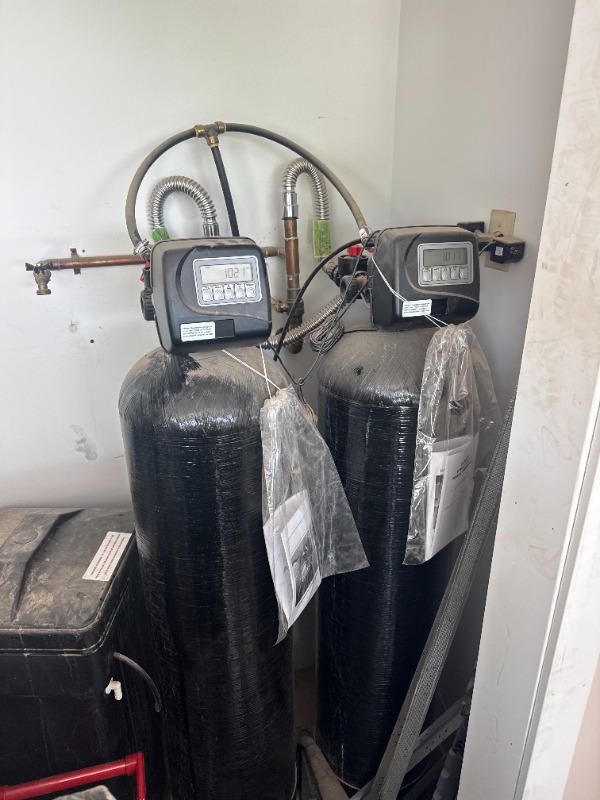
Most under-sink reverse osmosis water filtration system setups make water slowly, a few drops at a time, so they store it in a small pressurized tank. Inside that tank, a rubber bladder or diaphragm separates the water from a pocket of compressed air. When you open the RO faucet, the air pushes the water out. When the bladder or the air charge fails, both flow and taste can change.
Low Air Pressure in the Tank
The air charge leaks down slowly over time. The first sign is usually a weak, slow stream that runs out after a glass or two, even though the tank feels heavy. Low pressure mainly affects flow, but a tank that can’t empty well keeps older water sitting inside longer, and that water can start to taste stale.
Checking the Tank’s Air Pressure
You need an empty tank for an accurate reading. Turn off the valve that feeds the RO system, then open the RO faucet and let it run until it stops. Look for a small valve on the side or bottom of the tank, often under a plastic cap. It looks like the valve on a bike tire. Press a tire gauge onto it. Most manufacturers call for roughly 6 to 8 psi with the tank empty, and many tanks list the exact number on the label. If the reading is low, add air with a bike pump, then turn the water back on and let the tank refill.
Signs of a Ruptured Bladder
If you press the valve and water comes out instead of air, the bladder has failed. Water is now touching the inside of the tank. In steel tanks, that can bring a metallic or rusty taste, and a damaged bladder can add a rubbery one. The tank also won’t hold an air charge anymore. Since bladders in these small tanks generally can’t be repaired, the fix is a new tank.
Stale Water in the Tank and Tubing
The carbon pre-filter in a reverse osmosis system removes chlorine before water reaches the membrane. That protects the membrane, but it also means the finished water has little to no disinfectant left once it’s stored. When water sits for days, such as after a vacation or in a home where the RO faucet rarely gets used, it can pick up a flat or musty taste from the tank and tubing. A warm sink cabinet speeds that process up.
The fix is simple. Open the RO faucet and let it run until the tank is completely empty. Close the faucet and let the system refill, which can take a few hours depending on the system. Drain it once more, then taste the next full tank. If the stale taste comes back within days of flushing, the tank and lines may need sanitizing. Many manufacturers recommend sanitizing the system during regular filter service.
When the Post-Filter Is the Problem
The last stage in most RO systems is a carbon post-filter, sometimes called a polishing filter. It’s usually a small inline cylinder between the tank and the faucet. Its job is to catch any tastes or odors the water picks up while stored. When the carbon is used up, those tastes pass straight through to your glass.
A worn-out post-filter usually causes a gradual change over a few weeks rather than an overnight one. Many manufacturers suggest replacing it about once a year, but your system’s manual is the best guide. If you can’t remember the last change, the post-filter is a good first suspect.
Some systems also have a remineralization stage that adds small amounts of calcium and magnesium back into the water. When that stage runs out, water tends to taste flatter or slightly sour. RO water is naturally a little acidic because carbon dioxide passes through the membrane, and the remineralizer helps balance that out.
Why a New Filter Can Make Water Taste Worse at First
New carbon filters release fine carbon dust and trapped air. If you don’t flush them, the first few glasses can taste like plastic or chemicals. Manufacturers usually recommend draining the first full tank, or sometimes two, after a filter change. If a plastic taste shows up right after new filters go in, flushing typically clears it.
Other Problems That Change RO Water Taste
If the tank checks out and the filters are fresh, test the membrane. An inexpensive TDS (total dissolved solids) meter lets you compare tap water and RO water. A healthy membrane removes most dissolved solids, so the RO reading should be far lower than the tap reading. If the RO number creeps up toward the tap number, the membrane may be wearing out.
Pre-filters matter here too. Sediment and carbon pre-filters protect the membrane, and chlorine can damage the thin-film membranes used in most home systems. Pre-filters that go too long between changes can shorten membrane life and let tastes through.
It’s also worth checking the drain line. Some RO faucets have an air gap connected to the drain. A clogged drain connection can cause gurgling at the faucet and odors near the sink that are easy to mistake for a water taste problem.
How Valley Water and Heat Affect RO Systems
Tempe gets its water from the Salt and Verde rivers and the Central Arizona Project canal. Water across the Valley is hard, meaning it carries a lot of dissolved minerals. Those minerals load up sediment filters and membranes faster, so filter intervals may need to be shorter than the numbers printed on the box.
During warmer months, Valley utilities have reported earthy or musty tastes in tap water caused by natural compounds from algae in canals and reservoirs. These compounds aren’t harmful, and a working carbon stage typically removes them. If you start tasting that earthy note in your RO water, it’s a good sign your carbon filters are spent.
Heat plays a role as well. Sink cabinets on exterior walls and systems installed in garages get warm during summer. Warm stored water turns stale faster, so homes with RO systems in hot spots may need more frequent flushing and sanitizing.
Frequently Asked Questions
How often should I drain my RO tank?
If you use your RO water daily, routine draining usually isn’t needed. Drain it completely after you’ve been away for several days or any time the water starts tasting stale.
Is RO water that tastes off safe to drink?
A metallic or musty taste doesn’t automatically mean the water is unsafe, but it does mean a part needs attention. Use another water source until you’ve flushed the system and checked the tank and filters. If the water smells like rotten eggs or sewage, don’t drink it.
Why does my RO water taste flat when nothing seems wrong?
RO removes most minerals, and minerals give water much of its taste. A flat taste is normal for systems without a remineralization stage.
Should I replace all the filters at the same time?
Pre-filters and the post-filter are often on similar schedules, so many homeowners change them together. The membrane usually lasts longer and can be replaced based on TDS readings.

Book an RO Tank and Filter Check With Desert Drain Plumbing
If you’ve checked the tank pressure, flushed the system, and changed the post-filter, but the taste still isn’t right, our team can track down what’s causing it, whether that’s a failed tank, a worn membrane, or a drain connection problem. We’re a family-owned and operated, full-service plumbing company with 38 years in the business, and we’re licensed, bonded, and insured. We offer fast same-day service, 24/7 emergency plumbing service, and financing available on larger repairs. Military personnel, first responders, teachers, and senior citizens receive discounts, and we’re BBB accredited. As a faith-based service, we treat every home with care and respect.
Call Desert Drain Plumbing LLC for a free in-person quote and get your drinking water back to tasting the way it should.