

When Lukewarm Showers Signal a Hidden Plumbing Problem
You step into the shower on one of those crisp October cooler mornings, expecting a blast of heat, but instead, you are greeted by lukewarm water that quickly fades to cold. When faced with a sudden lack of hot water, basic home maintenance tips and troubleshooting usually point homeowners toward a failing heating element or an aging tank. At Desert Drain Plumbing, our team fields countless calls like this every fall. A sudden drop in available hot water is a frustrating start to any morning, and we find it is incredibly common for homeowners to assume their water heater is simply dying due to age and daily wear.
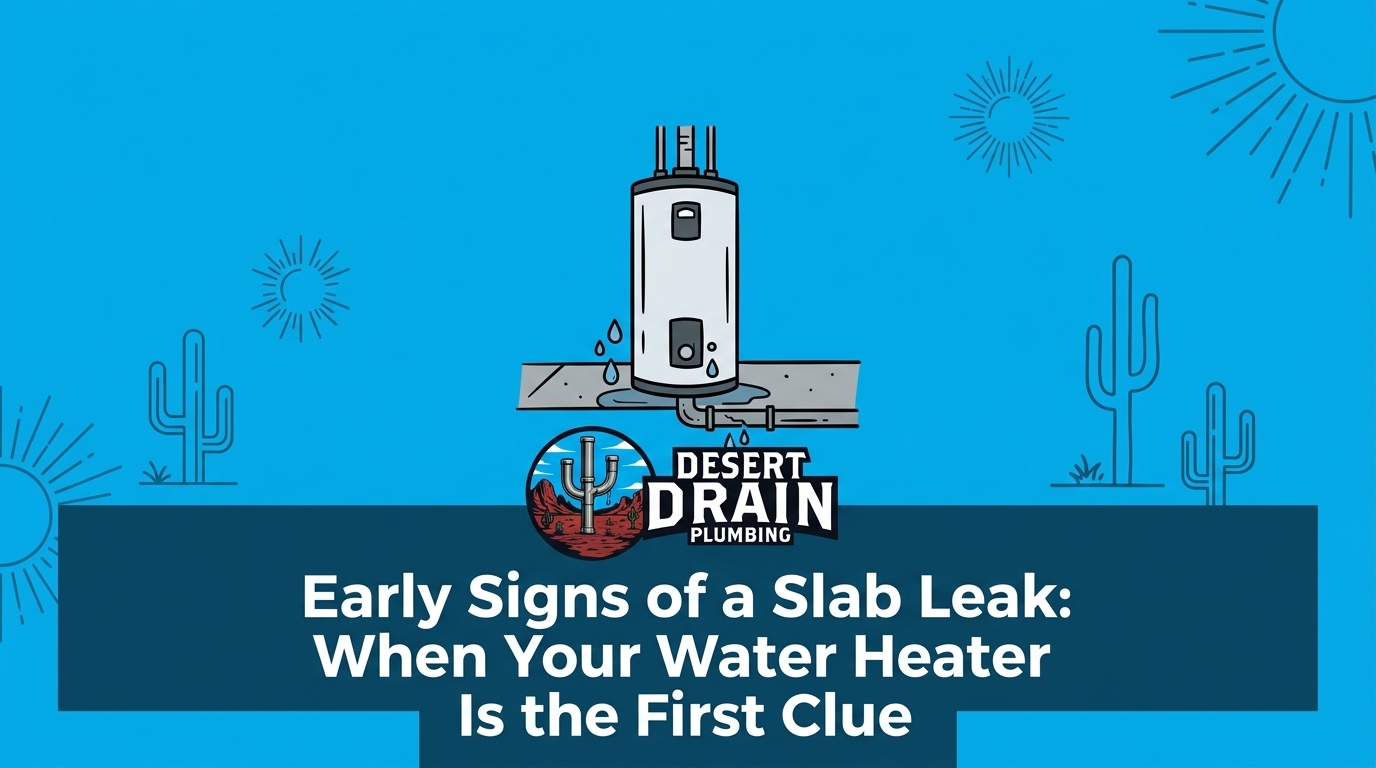
However, in our years of serving Mesa homes, we often uncover another, far more insidious culprit that frequently goes completely undetected until major damage occurs. An overworked water heater can actually be the first major symptom of a hot water slab leak hidden deep beneath your foundation. When a pipe ruptures beneath the concrete, it continuously drains your hot water supply, forcing your heating system into a state of constant overdrive.
Recognizing the difference between a standard appliance failure and a hidden plumbing leak early allows for timely professional diagnosis. Catching this issue now, before winter demand peaks, is the best way to protect your plumbing infrastructure and prevent extensive, unseen water damage to your property.
How a Hot Water Slab Leak Overworks Your Water Heater
To understand why a slab leak affects your water heater so severely, you have to look at how the plumbing system is mechanically connected. In our field experience, we see firsthand that a slab leak on a hot water line acts exactly like a faucet that is never turned off. Because the heated water is constantly escaping into the soil, gravel, or foundation beneath your home, there is a continuous, unending demand on the water heater tank.
This constant demand forces the water heater to run continuously to replace the lost heated water. Instead of resting between uses, the burner or heating elements fire non-stop. This continuous operation drastically reduces the lifespan of the internal heating components, the thermostat, and the tank itself.
Signs your water heater is warning you about a hot water slab leak:
- Constant running sounds: The gas burner or electric heating elements never seem to shut off, even in the middle of the night when no one is using water.
- Sudden drop in hot water capacity: Showers run cold much faster than usual, a symptom that becomes highly noticeable during October cooler mornings.
- Unusually high energy bills: Continuous heating requires massive amounts of electricity or natural gas, causing a sudden spike in your utility costs.
- Rapid sediment buildup: The constant influx of new municipal water brings in a continuous stream of dissolved minerals, accelerating scale accumulation at the bottom of the tank.
The Cycle of Continuous Heating
Traditional tank water heaters are designed to heat water in distinct cycles, not continuously. They fill up with cold municipal water, heat that water to the set temperature indicated on the thermostat, and then hold that temperature in standby mode until you open a tap somewhere in the house.
When a hot water line is leaking under the slab, the tank is constantly losing its heated reserve and taking in fresh, cold water to replace it. This continuous heating prevents the tank from ever reaching its set temperature, resulting in lukewarm output at the fixtures. The system becomes trapped in a never-ending cycle, burning through energy and wearing down mechanical parts just to heat water that immediately leaks out under your foundation.
| System Behavior | Normal Water Heater Operation | Operation During a Hot Water Slab Leak |
|---|---|---|
| Heating Cycles | Periodic; rests once target temperature is reached. | Continuous; never reaches target temperature. |
| Energy Consumption | Predictable and stable based on household usage. | Massive spikes due to 24/7 heating element operation. |
| Sediment Accumulation | Gradual buildup over months or years. | Accelerated buildup due to constant intake of fresh water. |
| Component Lifespan | Standard 8 to 12 years with proper maintenance. | Premature failure of elements, burners, and thermostats. |
The Impact of Local Hard Water on a Leaking System
The problem of an overworked water heater is compounded significantly by regional water quality. As local plumbers, we know the Mesa AZ local water supply is notoriously hard, meaning it contains exceptionally high levels of dissolved minerals, primarily calcium and magnesium. Under normal operating conditions, these minerals slowly precipitate out of the water as it is heated, settling at the bottom of the tank as sediment over the course of a year.
The problem: When a water heater runs non-stop due to a hidden hot water leak, it accelerates the precipitation of these hard water minerals at an alarming rate. Because the tank is constantly taking in fresh, mineral-heavy water from the municipal supply and heating it continuously, the chemical reaction that causes scaling never stops.
The cause: This continuous flow creates a heavy, thick layer of scale and sediment at the bottom of the tank much faster than normal. This sediment acts as a dense layer of insulation between the heating element (or the gas burner at the bottom of the tank) and the water itself. Because the heat cannot efficiently transfer through the hardened mineral layer, the heater must work even harder and burn hotter to warm the water, trapping intense heat at the bottom of the tank.
The solution: Recognizing this rapid scaling is a massive red flag that the system is losing water somewhere unseen. If our plumbing professionals note that your system requires flushing far more frequently than the standard annual recommendation, we know it is time to investigate beyond the appliance itself. Addressing the underlying slab leak stops the continuous flow of hard water, protecting the water heater from premature failure and restoring your home’s energy efficiency.
Listening to Your Plumbing: Popping Noises and Sediment Buildup
Our technicians frequently remind homeowners that your plumbing system will often give you audible clues when something is going wrong, provided you know what to listen for. A heavily scaled water heater will often produce loud popping, rumbling, or knocking sounds. These noises occur when water becomes trapped under the hardened sediment layer at the bottom of the tank. As the heating element warms up, the trapped water boils, turns to steam, and violently bursts through the mineral crust, creating a distinctive popping or banging sound.
While some minor sediment buildup is common—especially given the mineral content of the Mesa AZ local water supply—a sudden onset of these loud noises often points to a larger systemic issue like a slab leak driving rapid scale formation. It is a pattern we see often: the volume of sediment reaches a critical, potentially damaging level that forces the tank to overheat.
A crucial safety warning regarding sediment: Flushing a severely scaled tank requires professional equipment, specialized descaling solutions, and hands-on expertise. Homeowners should never attempt to drain or flush the system themselves. DIY flushing of a heavily scaled tank carries severe scalding risks from pressurized hot water. Furthermore, the drain valves on older, sediment-filled tanks are highly prone to breaking or failing to close completely once opened by an untrained hand, which can lead to active, unstoppable flooding in your garage or utility closet. Always rely on a licensed professional to safely manage tank maintenance and diagnose the root cause of the rapid scaling.

Why Fall Temperatures Expose Hidden Hot Water Depletion
We frequently hear homeowners wonder why their plumbing issues suddenly seem to appear overnight as the seasons change. The reality our team observes in the field is that a hot water slab leak may have been present for months, but the symptoms are often masked by the intense summer heat. During the peak heat of summer, ground temperatures and ambient air keep the incoming municipal water relatively warm before it even reaches your house.
Because the incoming water is already tepid, the water heater does not have to work as hard to bring it up to a comfortable shower temperature, even if a hidden leak is slowly draining the tank. The system can often keep up just enough to mask the problem from the residents.
However, as ambient temperatures drop in the fall, the incoming municipal water is significantly colder. The stark contrast between the cold morning air and a lukewarm shower makes the hot water depletion impossible to ignore. When those October cooler mornings arrive, the water heater is suddenly tasked with heating much colder water while simultaneously fighting the continuous drain of a slab leak. A system that was secretly struggling all summer will finally show obvious signs of failure as the seasons change. The drop in temperature removes the thermal buffer that summer provided, exposing the hidden leak and the overworked water heater for what they truly are.
Additional Warning Signs of a Slab Leak
While your water heater is often the first component to show signs of distress, it is rarely the only symptom. Because a slab leak occurs under the concrete foundation of your home, the escaping water has to go somewhere. If you are experiencing water heater issues alongside any of the following symptoms, a leak beneath your foundation is highly likely.
Watch for these secondary indicators:
- Unexplained warm spots on floors: Hot water escaping from a ruptured line will heat the concrete and flooring material directly above it. You may notice unusually warm patches on tile, linoleum, or hardwood floors, especially in kitchens, bathrooms, or hallways.
- The persistent sound of running water: If you hear the faint sound of water flowing, hissing, or rushing in the walls or under the floor when all fixtures, appliances, and irrigation systems are completely turned off, water is actively leaking from a pressurized pipe.
- A sudden, unexplained spike in the monthly water bill: Even a tiny pinhole leak running continuously will waste thousands of gallons of water over a single billing cycle. If your usage spikes dramatically without a corresponding change in household habits, investigate immediately.
- A noticeable drop in overall water pressure: When water is constantly exiting the plumbing system through a leak, there is less pressure available to push water through the rest of the house, resulting in weak flow at sinks, showerheads, and appliances.
Our plumbers know that diagnosing these issues correctly requires a comprehensive approach to home plumbing. For a deeper dive into how these leaks form and how they affect the structural integrity of your home, reading up on understanding the science of slab leak repair can provide valuable context. The unique mineral composition of the Mesa AZ local water supply can also contribute to pipe corrosion over time, a common factor we find makes older homes particularly susceptible to these under-foundation leaks.
Choosing Non-Destructive Diagnostics for Your Plumbing
When you are dealing with a sudden lack of hot water on those October cooler mornings, guessing whether it is a bad water heater or a slab leak can lead to unnecessary expenses. We always advise against replacing a water heater when the real problem is a broken pipe under the foundation; it will not solve your hot water shortage, and it will leave the leak actively eroding the soil beneath your property.
Historically, finding a slab leak involved an invasive “search and destroy” method. Tearing up flooring, breaking through concrete, and excavating large sections of the foundation to search for a suspected leak is an outdated and highly destructive approach. It disrupts your daily life, creates massive messes, and drives up repair costs significantly as you are forced to pay for both the plumbing repair and the subsequent home remodeling.
Modern plumbing diagnostics use advanced technology to find the exact location of the leak without swinging a single sledgehammer. Acoustic listening devices allow technicians to hear the exact frequency of water escaping from a pipe deep underground. Thermal imaging cameras can detect the heat signature of a hot water leak warming the slab from below, painting a clear picture of the problem area. Pressure testing isolates specific lines to confirm exactly which pipe is compromised without exposing it first.
Our team at Desert Drain Plumbing specializes in these non-destructive diagnostic methods to accurately identify complex issues without tearing up Mesa homes. Pinpointing the exact source of the problem ensures only the necessary repairs are made. By utilizing precise diagnostic tools, you save time, protect your flooring, and ensure that the root cause of your overworked water heater is permanently resolved with minimal disruption. Additionally, repairing these severe efficiency drains may make your home eligible for generic utility incentive programs designed for improved energy performance (we always recommend verifying current rebates with your local utility provider).
Frequently Asked Questions About Hot Water Slab Leaks
Is my water heater failing or do I have a slab leak?
A failing water heater typically shows signs of age, rust around the fittings, or electrical faults, whereas a slab leak will cause the heater to run continuously while often being accompanied by warm spots on your floor or an unexpectedly high water bill. If your tank is relatively new but you are suddenly running out of hot water, a hidden leak pulling water from the system is a strong possibility. A professional pressure test by our team can definitively rule out a slab leak without any destructive searching, giving you a clear answer on whether the appliance or the piping is at fault.
Why am I running out of hot water so fast in the morning?
Running out of hot water quickly usually means your tank is either undersized for your household, filled with insulating sediment, or constantly draining due to a hidden hot water line leak. When a leak pulls hot water out of the tank continuously, the system simply cannot heat the incoming cold water fast enough to keep up with your morning shower demand. This depletion becomes especially noticeable during the fall and winter months when the incoming municipal water is much colder and requires more energy to heat.
Can hard water cause a slab leak?
Yes, hard water can absolutely contribute to the development of a slab leak over time. The high mineral content in the Mesa AZ local water supply can cause scale buildup inside copper pipes, which creates friction and turbulence as water flows through the lines. Over years of use, this turbulence can slowly wear away the interior lining of the pipe—a process known as pitting corrosion—eventually creating a pinhole leak under your foundation.
What does a hot water slab leak sound like?
A hot water slab leak often sounds like water continuously running, rushing, or hissing beneath your floors, even when all faucets, toilets, and appliances are completely turned off. You might also hear your water heater firing up and running non-stop, as it constantly tries to replace the water escaping from the broken pipe. If you place your ear near the floor in a quiet house, you may hear a faint vibrating sound near the exact location of the subterranean leak.
Can a slab leak cause my water heater to run constantly?
Absolutely. Because a hot water slab leak acts exactly like an open faucet that never shuts off, the water heater is forced to continuously heat incoming cold water to replace what is lost. The thermostat inside the tank never registers that the water has reached the target temperature because the heated water is immediately drained out under the foundation. This constant operation will quickly wear out the heating elements, accelerate sediment buildup, and drastically increase your monthly utility bills.
Protect Your Home Before Winter Demand Hits
As those October cooler mornings transition into the freezing temperatures of winter, your plumbing system will be put to the ultimate test. At Desert Drain Plumbing, we urge our clients not to wait for a complete loss of hot water or severe foundation damage to take action. Addressing sediment buildup and suspected hidden leaks early saves your plumbing infrastructure from catastrophic failure and keeps your utility bills manageable.
If your water heater is running non-stop, making loud popping noises, or producing lukewarm water, schedule a professional inspection with our team to ensure your system is ready for the colder months ahead. A clear explanation of how local hard water affects your specific system, combined with professional non-destructive diagnostics, will provide the targeted solutions you need to restore your home’s comfort and efficiency safely.