

When Sudden Downpours Turn Yard Drainage Into a Plumbing Emergency
If you want to understand exactly how late-summer monsoon storms expose hidden sewer cleanout vulnerabilities, you have to look beyond your roof when the August monsoon rolls in. The late-summer storm season is notorious for arriving without warning, instantly transforming a dry, sunbaked yard into a shallow lake. At Desert Drain Plumbing, we’ve noticed most homeowners immediately look up, checking their ceilings and skylights for the expected threat of roof leaks. However, the most catastrophic damage often starts right at ground level, completely out of sight.
The sudden reality: Rapid, heavy downpours create immense volumes of surface water in a matter of minutes. When this water pools around the foundation of your home, it interacts with ground-level plumbing components that were never designed to be submerged. A temporary yard drainage issue might seem like a landscaping annoyance, but our technicians know it can quickly escalate into a severe indoor plumbing emergency if your exterior sewer cleanout is compromised.
Your sewer cleanout is the direct access point to your home’s main sanitary line. When the cap is missing, cracked, or improperly sealed, standing floodwater pours directly into your household sewer system. You are faced with a critical decision point right now: proactively locate and visually secure your cleanout before the clouds gather, or risk raw sewage backing up into your living space during the next major storm. Taking action today is the only way to keep the storm outside where it belongs.
The Hidden Threat: Why Local Yards Flood So Quickly During Monsoons
To understand why yard pooling is such a severe threat to your plumbing, you have to look at the ground beneath your feet. Having repaired countless flooded systems across Mesa AZ, our team knows firsthand that the local soil composition plays a massive role in how water behaves during intense July and August microbursts. Unlike regions with deep, loamy soil that absorbs rain like a sponge, the desert relies on a different geological profile.
The caliche factor: Mesa yards are often heavily compacted and rich in caliche—a natural cement-like layer of calcium carbonate found just below the topsoil. Caliche has exceptionally low permeability. When a monsoon drops an inch of rain in twenty minutes, the ground simply cannot absorb the moisture fast enough. The absorption rate is overwhelmed almost instantly, leaving the water with nowhere to go but sideways.
This rapid surface runoff creates immediate, localized flash flooding right in your yard. Because homes are typically graded to direct water away from the structure, you might think you are safe. However, landscaping beds, settling soil, and retaining walls often trap this runoff directly against the foundation lines—exactly where exterior sewer cleanouts are usually installed.
When standing water accumulates in these garden beds or side yards, it completely submerges the ground-level plumbing access points. This standing water is the primary catalyst for cleanout infiltration. A perfectly sealed pipe will keep the water out, but if the desert sun has degraded the plastic cap over the past few years, that pooled water will find its way inside, turning a drainage delay into a plumbing disaster.
Storm Drains vs. Sanitary Sewers: Understanding the Difference
A common misconception we hear from homeowners is that any drain in the ground is meant to handle rainwater. This misunderstanding makes it difficult to see why yard water entering a sewer line is so dangerous. Your neighborhood actually relies on two entirely separate systems to manage water, and mixing them during an August monsoon leads to immediate failures.
Municipal storm drains are built specifically to handle the massive volume of rain and surface runoff generated by desert storms. In contrast, your home’s sanitary sewer system is a closed loop designed strictly for household wastewater—think toilets, showers, and washing machines. When rainwater breaches the sanitary system, it causes a phenomenon known as Infiltration and Inflow (I&I).
According to EPA guidelines, I&I is a primary source of sanitary sewer overflows. Your residential sewer cleanout is a direct pipeline to the sanitary sewer. It is absolutely not meant for yard drainage.
| System Characteristic | Municipal Storm Drain System | Residential Sanitary Sewer System |
|---|---|---|
| Primary Purpose | Manages rain, surface runoff, and floodwater. | Carries raw household sewage and wastewater. |
| Water Destination | Routes untreated water to local retention basins or washes. | Routes contaminated water to municipal treatment plants. |
| Capacity Limits | Designed for massive, rapid influxes of water. | Strictly sized for the calculated output of household fixtures. |
| Access Points | Open street grates and large culverts. | Sealed, airtight ground-level cleanout pipes. |
When a cleanout cap is missing, it essentially turns your private sanitary sewer into a makeshift storm drain. The municipal treatment plants cannot handle this sudden influx of stormwater, and more importantly, the narrow pipes beneath your home cannot handle the volume, leading to catastrophic backups.
How Floodwater Infiltrates Compromised Sewer Cleanouts
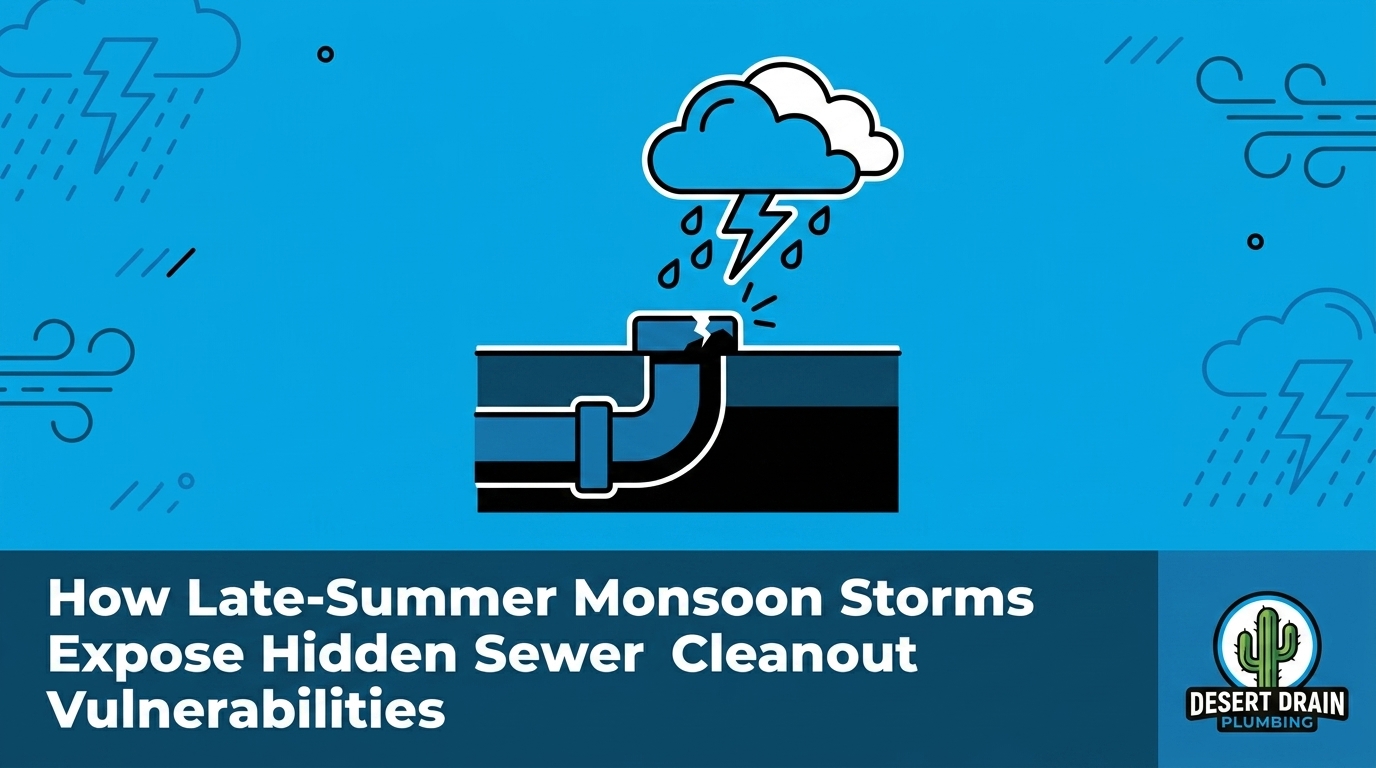
The exact mechanics of infiltration are fast and destructive. When localized yard pooling submerges a ground-level cleanout pipe, the weight of the standing water exerts constant downward pressure. If the cap is missing, cracked, or improperly threaded, there is nothing stopping the floodwater from pouring directly into the sanitary line.
The volume problem: A completely open four-inch cleanout pipe can take on hundreds of gallons of stormwater in a matter of minutes during an August monsoon. Your household sewer lateral—the pipe connecting your home to the city main—is only designed to handle a few gallons at a time from a flushing toilet or a draining bathtub. It is instantly overwhelmed.
Furthermore, this water is not clean. As the floodwater rushes into the pipe, it drags in surrounding mud, silt, landscape rock, and organic debris. This heavy, dense material settles at the bottom of the sewer lateral, creating a massive, impenetrable sludge barrier. Once this happens, standard snaking is rarely enough. We frequently see homeowners needing advanced solutions, like clearing severe pipe blockages with hydro jetting, just to scour the mud and rocks out of the line so normal wastewater can flow again.
As the debris creates a dam, the continuing influx of stormwater has nowhere to exit. The pressure builds rapidly within the residential sewer lateral. The pipe is completely submerged on the outside and completely blocked on the inside, setting the stage for the water to find the path of least resistance.

Visual Signs Your Sewer Cleanout is Vulnerable (No Tools Required)
Our plumbers always tell customers that protecting your home starts with knowing your risk level. You can safely assess your cleanout’s vulnerability without attempting any unlicensed plumbing work. This is strictly a visual inspection to determine if professional intervention is needed before the next storm hits Mesa AZ. Do not attempt to open the cleanout, and never use household duct tape or glues to try and seal a broken pipe.
Locating the Exterior Cleanout
Before you can inspect the cap, you have to find it. Cleanouts are often hidden by design to keep the yard looking tidy, which makes them easy to forget about until a problem occurs.
- Check the foundation line: Walk the perimeter of your home, paying close attention to the front foundation wall near where the municipal water meter sits near the street.
- Look in garden beds: Cleanouts are frequently hidden under overgrown late-summer landscaping or buried under decorative gravel.
- Identify the material: You are looking for a vertical pipe sticking a few inches out of the ground, typically made of white PVC or black ABS plastic, featuring a square-knobbed cap.
Identifying Cap Damage
Once you locate the cleanout, perform a hands-free visual check. The intense desert environment is brutal on exposed plastics, and mechanical damage is incredibly common in the yards we service.
- Missing caps: The most obvious red flag is a completely open hole where the cap should be. This guarantees immediate flooding.
- Sun-rotted plastic: Look for faded, chalky, or brittle plastic. The intense desert heat degrades PVC over time, causing it to shatter easily.
- Lawnmower damage: Check for jagged edges or chunks missing from the square nut on top, usually caused by landscaping equipment striking the pipe.
- Loose resting: If the cap is sitting crooked or resting loosely on top of the threads rather than being screwed down tight, it is not watertight.
If you spot any of these visual red flags, your system is vulnerable to immediate infiltration the moment yard water pools around it.
The Domino Effect: From Yard Pooling to Indoor Sewage Backup
The journey from a puddle in the yard to a disaster in the hallway happens faster than most people realize. In our years of emergency response, we’ve seen how understanding this domino effect highlights exactly why a compromised cap is so dangerous during an August monsoon.
The Problem: As the sanitary sewer line fills with floodwater from the compromised cleanout, the water level inside the pipes begins to rise. Because the municipal main is likely also running at high capacity, your household lateral cannot drain fast enough. The water has nowhere to go but up.
The Cause: Water always seeks the lowest point of relief. Inside a residential plumbing system, this is almost always a ground-floor fixture. The hydrostatic pressure forces the trapped water backward through your home’s drainage pipes. It bypasses the elevated sinks and toilets and erupts out of the lowest accessible point—typically a ground-floor shower, a sunken bathtub, or a laundry room floor drain.
The Solution: You are no longer just dealing with rainwater. Because the floodwater mixed with the contents of your sanitary sewer, the water backing up into your living space is raw, contaminated sewage. The health hazards of airborne pathogens and bacteria are severe, and the property damage to drywall, baseboards, and flooring is extensive. This entirely preventable disaster stems from a single compromised cap outdoors, proving that proactive defense is the only viable solution.
Why Professional Sealing is Critical Before the Next Storm
When you spot a damaged or missing cleanout cap, the instinct might be to grab a wrench and a replacement part from the hardware store. However, properly capping a cleanout requires specific threading, watertight seals, and sometimes repairing the pipe collar itself if the housing is cracked. Improper DIY sealing is highly dangerous; it can trap volatile sewer gases inside the pipe or simply fail and blow off under the extreme pressure of standing floodwater.
Working with our local team at Desert Drain Plumbing—a crew that has a deep understanding of Arizona’s unique monsoon-driven plumbing emergencies—means you get rapid response capabilities to secure your property before the next downpour in Mesa AZ. A licensed professional ensures the threads are perfectly matched and the seal is completely watertight.
Beyond just twisting on a new cap, a professional plumbing inspection verifies that the entire lateral line is intact. If debris has already entered a partially open pipe, our plumbers can identify the blockage before storm season peaks. Proactive professional maintenance is the only guaranteed way to lock out floodwater, protect your sanitary sewer, and keep your home safe from ground-level flooding.
Frequently Asked Questions
Can heavy rain cause a sewer backup?
Yes, heavy rain is a leading cause of residential sewer backups. When massive amounts of stormwater enter the sanitary sewer system through broken pipes or missing cleanout caps, the pipes become overloaded. The excess volume and pressure force raw wastewater backward into the home’s lowest drains.
Should my exterior sewer cleanout be capped?
Your exterior sewer cleanout must always be tightly capped and sealed. The cap prevents toxic sewer gases from escaping into your yard and stops debris, pests, and floodwater from entering your plumbing. Operating without a secure cap leaves your entire home vulnerable to severe blockages and backups.
How do I find my sewer cleanout in my yard?
Start by walking the perimeter of your home’s foundation, particularly near the front yard or the side closest to the municipal water meter. Look for a white or black plastic pipe sticking a few inches out of the ground, usually topped with a square knob. They are often hidden inside garden beds or obscured by overgrown shrubs.
What happens if a sewer cleanout is left open?
An open sewer cleanout acts as a funnel for any surface water, debris, or pests in the immediate area. During a storm, hundreds of gallons of water can pour into the open pipe, carrying mud and rocks that create massive clogs. This ultimately leads to the sanitary line backing up into your home.
Can I use duct tape to temporarily seal a broken cleanout cap?
Never use duct tape, household glues, or plastic bags to seal a cleanout. These DIY methods are not watertight and will easily fail under the pressure of standing floodwater or trapped sewer gases. A compromised cleanout requires a proper, threaded mechanical seal installed by a professional.
Why does my yard flood so quickly during a monsoon?
Desert soils contain high amounts of caliche, which is a hard, cement-like layer that severely limits water absorption. When heavy monsoon rains fall rapidly, the ground cannot soak up the moisture, resulting in immediate surface runoff and temporary flash flooding in your yard.
If you have noticed pooling water near your foundation or spotted a damaged cap during your visual inspection, do not wait for the next storm to test your luck. Schedule a professional plumbing inspection with Desert Drain Plumbing today to properly secure your exterior cleanouts. Taking proactive steps now ensures your system is locked tight, giving you total peace of mind when the heavy rains arrive.