

You turn on the shower, the water is hot, and then thirty seconds later it turns lukewarm or even cold for no reason. A few minutes after that, it’s scalding. This kind of temperature swing is one of the most common complaints homeowners bring to a plumber, and it almost always points to a specific mechanical problem rather than random bad luck.
If you’re dealing with this in Mesa, AZ, you’re not imagining it, and you don’t have to live with it. Most fluctuation problems come down to a handful of causes: sediment buildup, a miscalibrated thermostat, a failing heating element, or flow rate issues in a tankless system. Understanding which one applies to your unit is the first step toward fixing it, and it’s also the reason a proper water heater repair in Mesa, AZ often includes recalibrating the unit rather than just swapping a part.
This piece walks through why temperature swings happen, how tank and tankless systems each develop the problem differently, what a technician actually does during calibration, and when repair stops making sense compared to replacement.
What Actually Causes Hot Water to Swing Between Hot and Cold
A water heater is built to hold water at a set temperature and recover quickly once hot water is drawn out. When that balance breaks down, you get swings. There are four mechanical reasons this typically happens.
The first is a thermostat that no longer reads temperature accurately. Thermostats drift over time, especially in units that are five years old or more, and a drifted thermostat tells the heating element or burner to fire at the wrong moments.
The second is sediment. Minerals in the water settle at the bottom of the tank and form a layer that acts like insulation between the burner or lower heating element and the water above it. This layer causes uneven heating and can make the tank take longer to recover after use.
The third is a failing heating element in an electric unit, or a burner assembly problem in a gas unit. When one of two heating elements fails, the tank still produces some hot water, but not enough to keep up with demand, so temperature drops in the middle of a shower.
The fourth applies mainly to tankless systems: flow rate. Tankless units heat water on demand, and if too many fixtures draw water at once, the unit can’t keep up with the flow rate it needs to maintain a set output temperature, which causes the water to run cooler until demand drops.
How Sediment Buildup Shows Up in Tank Water Heaters
Sediment is the most common cause of fluctuation in traditional tank units, and it’s also one of the easiest to prevent with regular maintenance. As sediment accumulates, it does three things: it insulates the bottom of the tank from the heat source, it reduces the effective volume of water the tank can hold, and it can eventually clog the drain valve, which makes future maintenance harder.
Homeowners often notice sediment-related fluctuation as a rumbling or popping sound coming from the tank, along with water that starts hot and drops off faster than it used to. According to the U.S. Department of Energy, flushing a tank water heater at least once a year helps remove sediment and keeps the unit operating closer to its rated efficiency. In areas with harder water, sediment can build up faster, which means more frequent flushing may be worth discussing with a technician.
Thermostat and Heating Element Problems That Cause Uneven Temperatures
Most electric tank water heaters have two heating elements, an upper and a lower, each controlled by its own thermostat. When these two thermostats aren’t calibrated to work together correctly, you get a tank that heats unevenly from top to bottom. This shows up as water that’s hot for a short burst and then turns cool once the upper portion of the tank is used up.
Gas water heaters have a single thermostat that controls the gas valve and burner. If that thermostat becomes inaccurate, the burner may shut off before the water reaches the set temperature, or it may run longer than needed and cause temperature spikes. In both gas and electric units, recalibrating or replacing the thermostat restores consistent cycling, which is often enough to resolve fluctuation without needing to replace the whole hot water heater.
Why Tankless Water Heaters Fluctuate During Heavy Use
Tankless units solve some problems that tank systems have, but they introduce their own version of temperature fluctuation. Because a tankless unit heats water as it flows through, the temperature output depends directly on flow rate and incoming water temperature. If a dishwasher, a shower, and a washing machine all draw hot water at the same time, the unit may not have enough capacity to heat all of that flow to the target temperature, so output temperature drops.
Mineral scale is also a bigger concern for tankless units than most homeowners expect. Scale builds up inside the heat exchanger, which is a much smaller and more precise component than a tank, and even a thin layer of scale can affect how evenly the unit heats water. This is one of the main reasons tankless water heater repair often includes descaling the heat exchanger as part of restoring stable output. In some cases, especially with units serving larger households, tankless water heater replacement with a higher-capacity model is the more practical fix if the current unit is undersized for how the home actually uses hot water.
What Professional Calibration Actually Involves
Calibration isn’t a single step. It’s a process a technician works through to identify exactly where the temperature control has gone wrong and correct it.
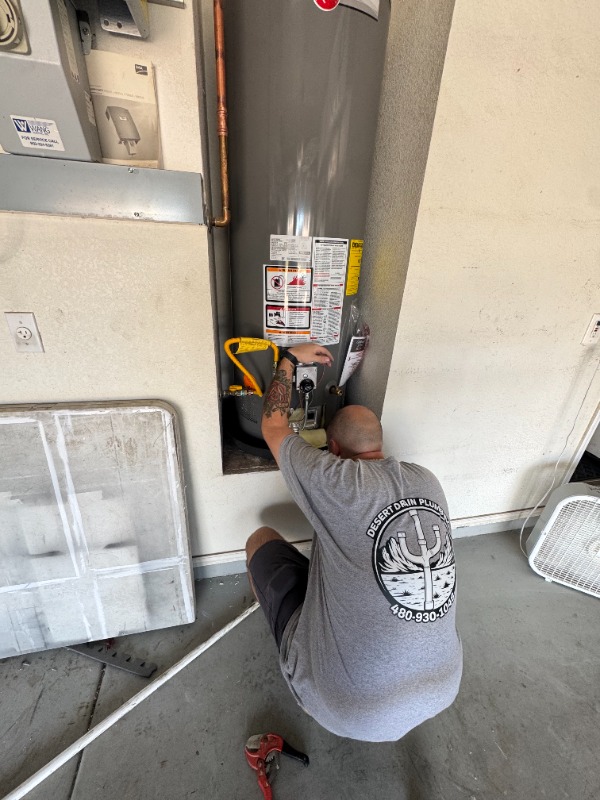
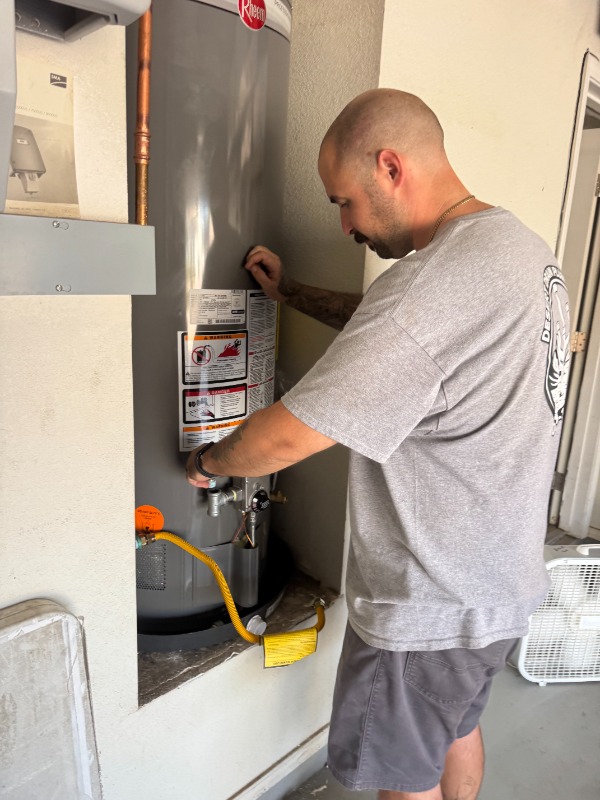
For tank units, this generally includes testing the accuracy of the thermostat against the actual water temperature, checking that the temperature and pressure relief valve is functioning correctly, inspecting heating elements for buildup or failure, and flushing the tank to remove sediment. For gas units, it also includes checking gas pressure and burner function, since incorrect gas pressure can cause the flame to run too hot or too cool relative to what the thermostat calls for.
For tankless systems, calibration usually involves descaling the heat exchanger, checking the flow sensor for accuracy, and confirming that the unit’s programmed output temperature matches what’s actually coming out of the tap. If a home’s plumbing layout causes multiple fixtures to compete for flow, a technician may also recommend adjustments to how fixtures are used simultaneously, or discuss whether tankless water heater installation of a second unit or a larger single unit makes sense for the household’s demand.
Local Water and Climate Factors in Mesa
Water in the Mesa area, like much of the greater Phoenix region, is known for higher mineral content compared to many other parts of the country. Harder water accelerates the two biggest mechanical contributors to temperature fluctuation: sediment buildup in tank units and scale formation inside tankless heat exchangers. This means water heaters in this area often need more frequent flushing and descaling than the same units would in a region with softer water.
Many homes in Mesa also have water heaters installed in garages or attics, spaces that see significant temperature swings of their own during the hottest months. While the water heater itself is designed to operate in a range of ambient temperatures, extreme heat around the unit can affect how components like thermostats and control boards perform over time, which is another reason routine inspection matters in this climate.
Repair or Replace: How to Tell Which One You Need
Not every fluctuation problem is fixed by calibration alone. A unit that is nearing the end of its expected service life, generally 8 to 12 years for a tank water heater according to manufacturer guidance, may fluctuate because internal components are wearing out across the board rather than one isolated part failing. In that case, repeated repairs can become a pattern without solving the underlying issue.
Signs that point toward water heater replacement rather than continued repair include a tank that shows visible rust at fittings or on the tank body, water that comes out with a rusty tint, frequent leaking around the base, or a unit that has already had a heating element or thermostat replaced within the past year and is fluctuating again. For households that have outgrown their current unit’s capacity, whether that’s an undersized tank or a tankless unit that can’t keep up with simultaneous use, water heater installation of a properly sized replacement often solves fluctuation problems that repair alone cannot.
What You Can Check Before Calling a Plumber
A few quick checks can help you describe the problem accurately and, in some cases, resolve it without a service call. Confirm the thermostat setting on the unit itself, since it’s not uncommon for the dial to get bumped or set lower than intended. Check the circuit breaker on electric units, since a tripped breaker can cause one heating element to stop working while the other continues to run. On gas units, confirm the pilot light is lit and burning steadily. If none of these resolve the issue, the problem is likely internal and worth having a technician look at directly.
Frequently Asked Questions
- Why does my water get hot then suddenly turn cold?
This usually means one heating element has failed while the other is still working, or that sediment has built up enough to disrupt even heating throughout the tank.
- How often should a water heater be flushed to prevent fluctuation?
The U.S. Department of Energy recommends flushing a tank water heater at least once a year, though homes with harder water may benefit from more frequent flushing.
- Can a tankless water heater be calibrated, or does it need to be replaced?
Most fluctuation issues in tankless units can be corrected through descaling and flow sensor calibration. Replacement is usually only needed if the unit is undersized for the home’s hot water demand or has failed internally.
- Is temperature fluctuation dangerous?
Sudden spikes to very hot water can pose a scald risk, particularly for young children or older adults, which is why a fluctuating temperature and pressure relief valve or thermostat should be looked at promptly rather than left alone.
Get Your Hot Water Back to Normal
Temperature swings are frustrating, but they’re also very fixable once you know what’s actually causing them. Desert Drain Plumbing LLC is a family-owned and operated plumbing company built on faith-based service, and we bring that same steady approach to every water heater call we take, whether it’s a quick calibration or a full replacement. We offer 24/7 emergency plumbing service for households that can’t wait for hot water to come back, along with fast same-day service for less urgent calls. If your unit needs more than a quick fix, we provide a free in-person quote so you know exactly what’s involved before any work begins, and financing is available for larger jobs like a full unit replacement. Reach out to us and let’s get your hot water working the way it should.