

If your home deals with hard water every day, a dual-tank water softener is often the better fit for larger households with higher water use, while a single-tank unit is a practical choice for many smaller homes. The right option depends on how much softened water your family uses, how often the system regenerates, and your long-term goals for efficiency and convenience. As we help homeowners choose the right water softener in Gilbert, AZ, we often find that understanding these differences makes the decision much easier.
Hard water is common throughout the Southwest because local groundwater naturally contains high levels of calcium and magnesium. Those minerals leave spots on dishes, shorten the life of appliances, create soap scum, and leave scale inside plumbing. Knowing how each type of softener works helps you invest in a solution that fits your household instead of paying for features you may never use.
How Does a Single-Tank Water Softener Work?
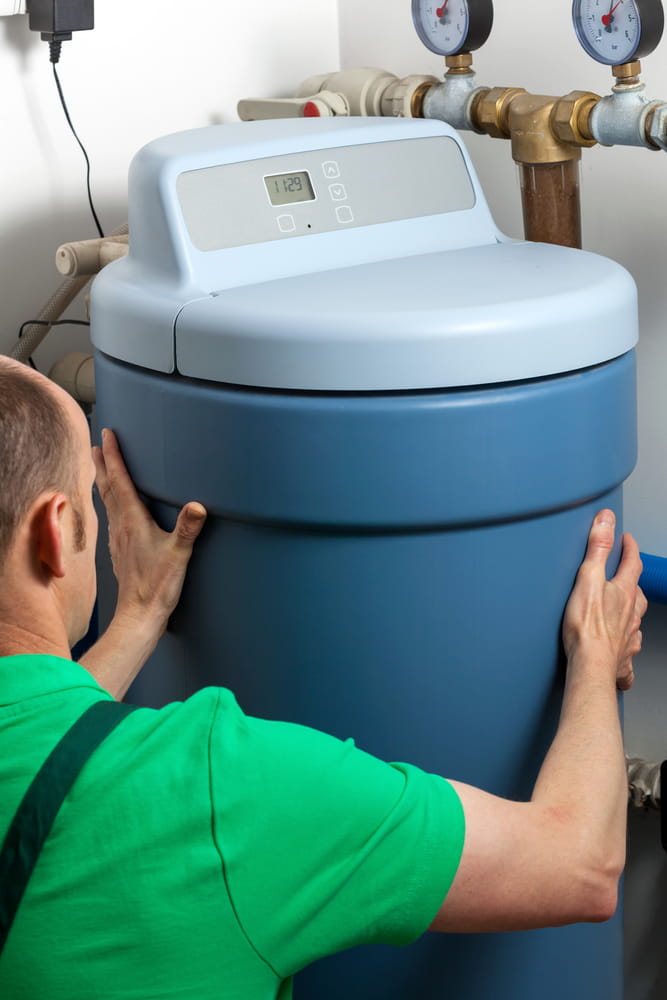
A single-tank unit has one resin tank that removes hardness minerals from your water. Once the resin becomes full, the unit goes through a regeneration cycle using salt and water to recharge the resin before softening water again.
If your home needs water softener installation, a single-tank model is often recommended for:
- Small to medium households
- Homes with predictable daily water use
- Families looking for a lower upfront investment
- Properties with limited installation space
During regeneration, many single-tank systems temporarily stop delivering softened water. If someone runs water during that period, hard water may pass through until the cycle finishes. Many modern systems schedule regeneration overnight to reduce the chance of this happening.
Why Do Some Homes Benefit From a Dual-Tank System?
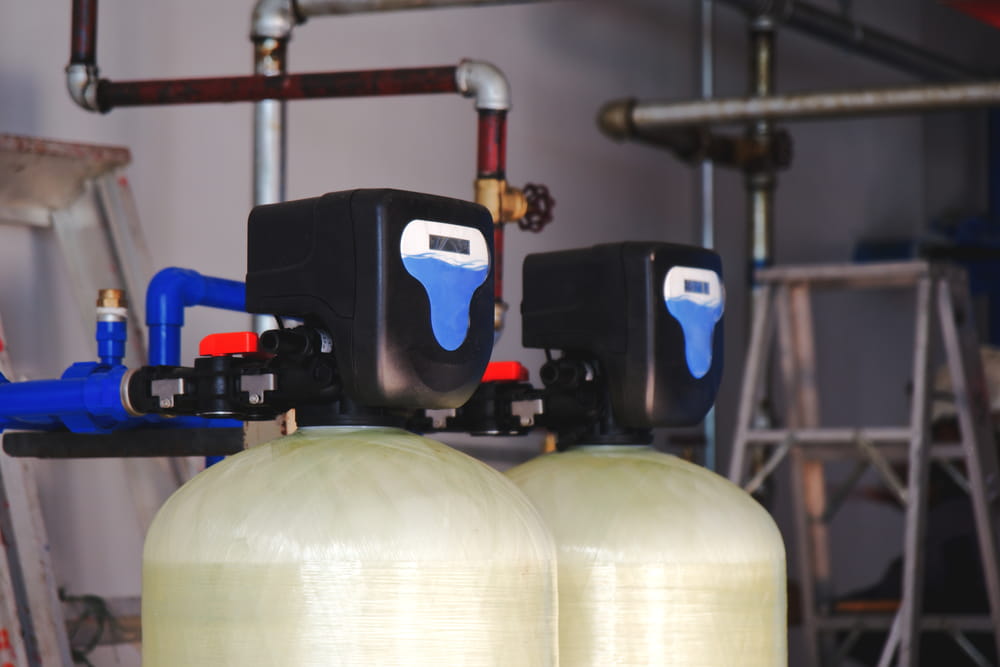
Dual-tank systems contain two resin tanks that alternate during operation. While one tank softens water, the other can regenerate. That means softened water remains available throughout the process instead of pausing during regeneration.
This type of water softener system is often a good fit for:
- Larger families
- Homes with high daily water demand
- Multi-bathroom properties
- Households that use water at all hours
Although dual-tank systems generally cost more at the beginning, they provide uninterrupted softened water and can improve efficiency for homes with heavy water use.
Which Option Uses Salt and Water More Efficiently?
Many homeowners assume two tanks automatically mean higher operating costs, but that is not always the case.
A properly sized single-tank system can be very efficient for households with moderate water use. A dual-tank system, on the other hand, often regenerates only when needed instead of following a fixed schedule. That demand-based operation can reduce unnecessary salt and water use over time.
The best results depend less on the number of tanks and more on proper sizing, programming, and professional water softener installation based on your household’s daily water usage.
How Do You Know Which System Fits Your Home?
The best softener is the one that matches your family’s habits instead of simply being the largest model available.
A single-tank unit may be the better choice if:
- One to four people live in the home.
- Water use stays fairly consistent.
- Budget is an important consideration.
A dual-tank water softener system may make more sense if:
- Five or more people regularly use water.
- Laundry, showers, and dishwashing often happen throughout the day.
- You want softened water available at all times.
Water hardness, plumbing layout, and daily water consumption all play a role in choosing the right equipment.
What Happens if the System Is Too Small or Too Large?
Buying the wrong size softener can reduce performance regardless of how many tanks it has.
An undersized system regenerates more often, increasing salt consumption and reducing efficiency. An oversized unit can hold water longer than recommended, making regeneration less efficient than intended.
That is why we evaluate your household’s water usage before recommending a water softener system instead of suggesting the same equipment for every home.
Water Softener FAQ
Does a dual-tank softener soften water faster?
No. Both systems soften water at similar rates. The biggest difference is that dual-tank models continue supplying softened water while one tank regenerates.
Will a water softener remove chlorine?
No. Standard water softeners remove hardness minerals, not chlorine. Additional filtration is needed if chlorine reduction is a goal.
How long does a water softener usually last?
Many quality systems last 10 to 15 years or longer with routine maintenance and proper settings.
Can extremely hard water damage plumbing?
Yes. According to the U.S. Geological Survey, hard water minerals can accumulate inside pipes, fixtures, and water-using appliances over time, reducing efficiency. The Environmental Protection Agency also recognizes hardness as a common characteristic of groundwater, though it is not considered a health concern.
Choose a Softener That Fits Your Home
The best water softener is not simply the biggest or most expensive model. It is the one that matches your household’s water use and delivers reliable performance day after day. At Desert Drain Plumbing, we help homeowners compare their options with honest recommendations, free in-person quotes, and financing for qualifying projects. As a family-owned and operated plumbing company, we also offer fast same-day scheduling whenever possible, along with 24/7 emergency plumbing service when unexpected problems arise.
If you’re planning a new water softener or replacing an older unit, call now and let us help you choose a system that fits your home.